#1 Best friend
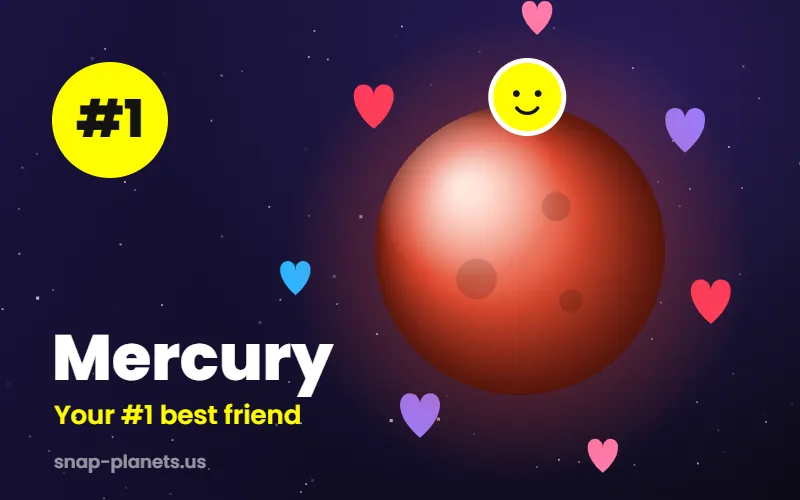
Mercury
Looks like: a red-orange planet circled by red hearts.
The top spot. You swap more snaps and chats with this person than with anyone else — usually a partner, a sibling or the friend who gets every random thought.
Snapchat Planets turn your best friends list into a tiny solar system. Here's every Snap planet in order, what each one means, and how to find out where you rank in a friend's orbit.
By Snap Planets Editorial Team · · 12 min read
Quick answer
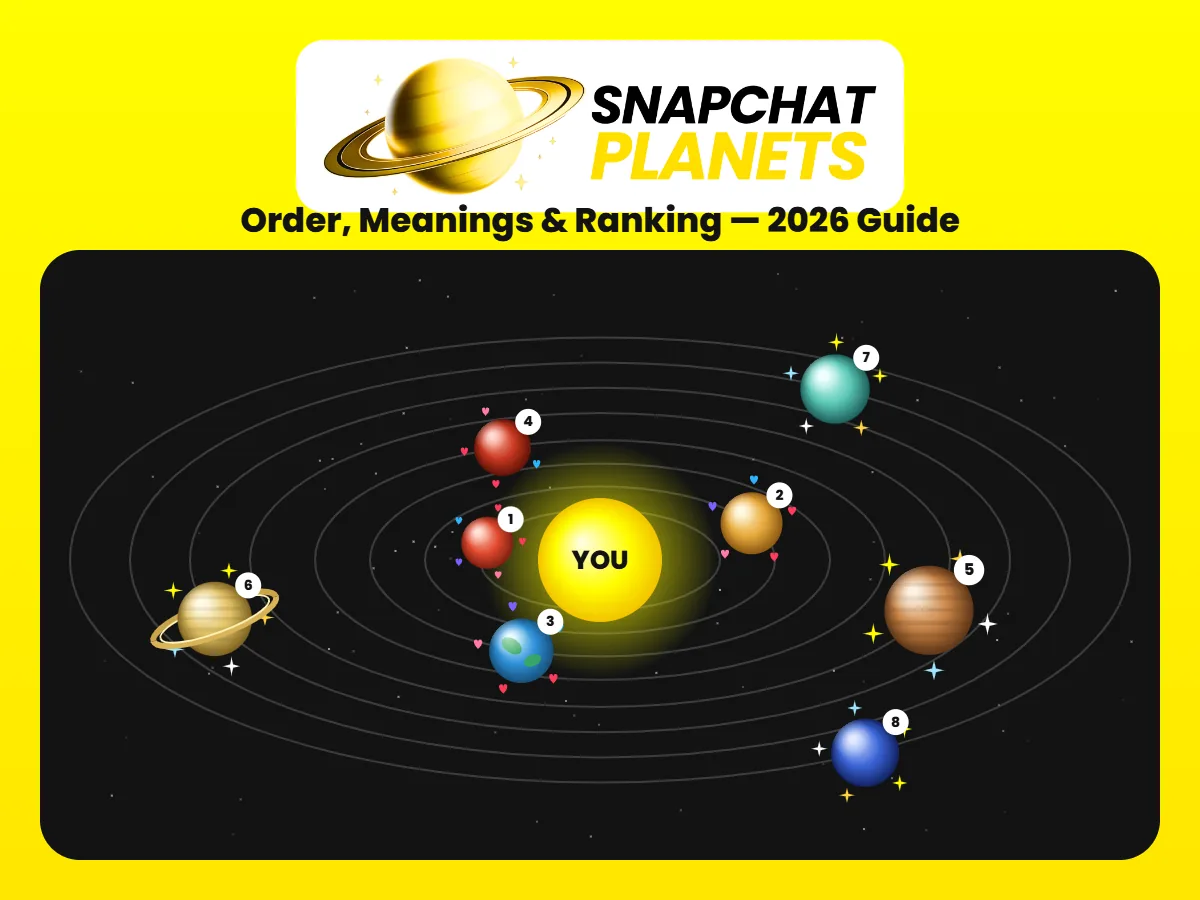
Snapchat Planets is a Snapchat+ feature, officially called the Friend Solar System, that ranks a person's top 8 best friends as planets. The Snapchat planets in order are:
Mercury is the #1 best friend — the person you snap and chat with most. Neptune is #8, the lightest connection in the top eight.
Pick the friendship rank you already know, or estimate your Snapchat planet from how often you trade Snaps, Chats, Story replies and streaks.
Tap a number from 1 to 8, then reveal the planet that matches it.
The planet stays hidden until you reveal it.
Not sure of your exact rank? Rate your activity with this friend and we'll estimate it.
This tool is for fun and learning. It doesn't connect to Snapchat, scan your account or read any private data. Your real planet only shows inside Snapchat+.
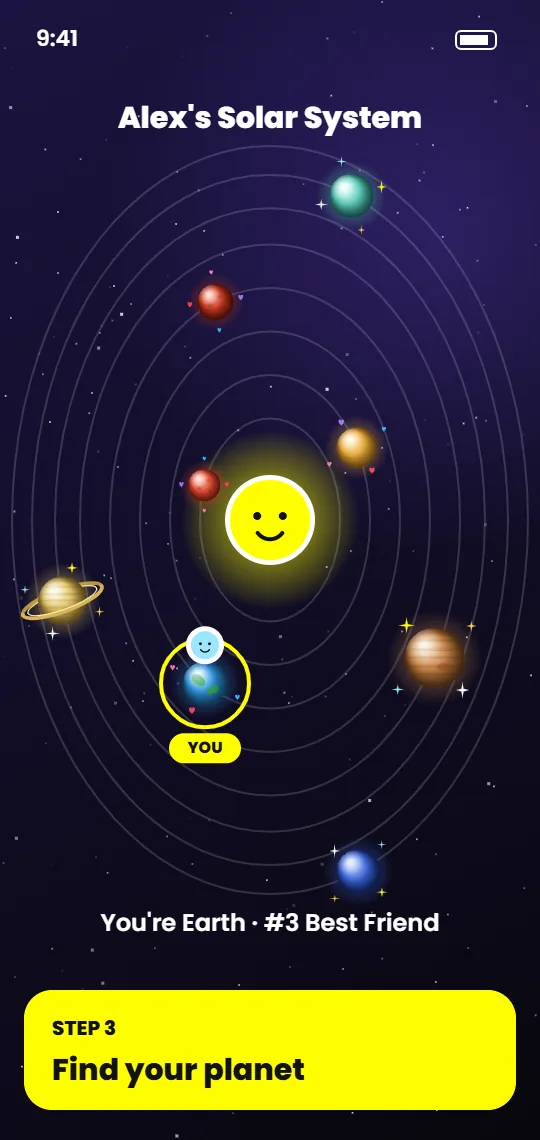
Snapchat Planets is the popular name for the Friend Solar System, a feature Snap added for Snapchat+ subscribers in 2022. Instead of showing a plain ranked list, it treats every person as the Sun at the center of their own solar system. Their eight closest friends on the app orbit around them as planets — the closer the planet, the closer the friendship on Snapchat.
The order is borrowed straight from our real solar system (if you want a refresher, NASA's guide to the planets is a good one). Mercury sits nearest the Sun, so it goes to a person's #1 best friend. Neptune is the farthest, so it goes to #8.
Nothing here is set by hand. Snapchat quietly recalculates the ranking in the background as you snap, chat, reply to stories and keep streaks going. That's why the same friend can be your Venus this month and your Saturn the next. People also call it “Snap Orbit” or simply “Snap planets” — it's all the same feature.
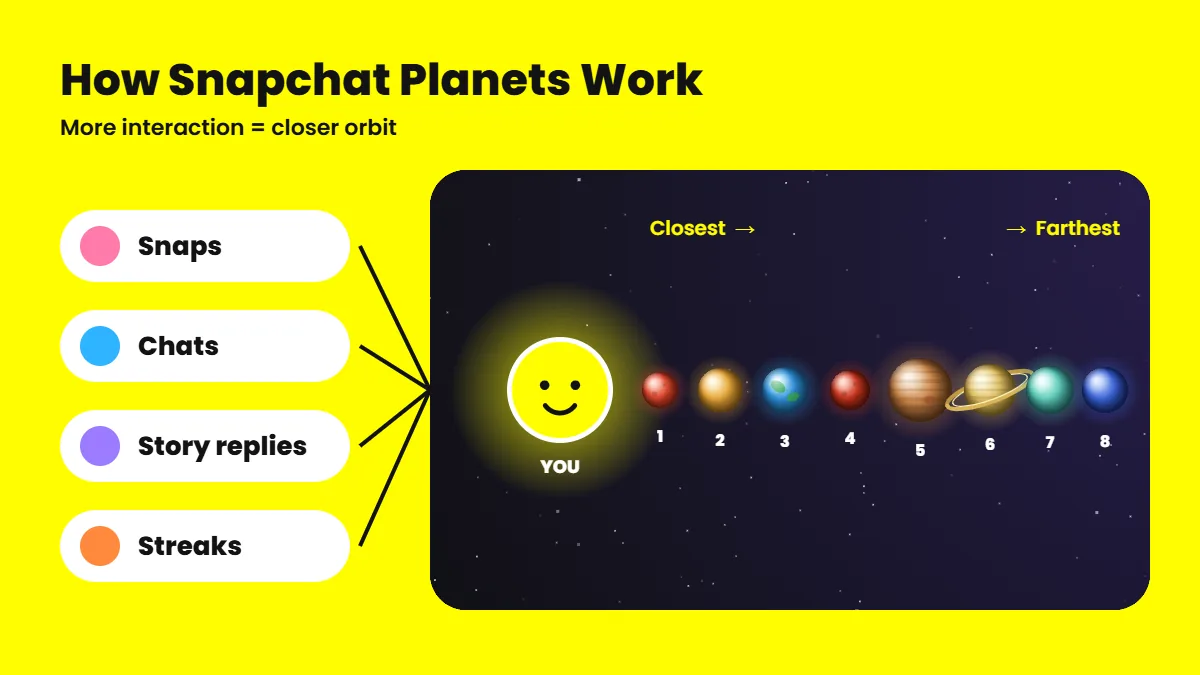
Here are all eight Snap planets in order, with the best friends rank and the kind of interaction each one usually reflects. Bookmark this table — it's the fastest way to decode any solar system you see.
| Planet | Rank | Interaction | What it means |
|---|---|---|---|
| Mercury | #1 | Highest | Your closest best friend on Snapchat |
| Venus | #2 | Very high | Almost as active as your Mercury |
| Earth | #3 | High | A steady friend you talk to most days |
| Mars | #4 | Fairly high | Regular contact, just below your top three |
| Jupiter | #5 | Moderate | A good friend you snap on and off |
| Saturn | #6 | Light to moderate | Friendly, occasional chats |
| Uranus | #7 | Light | Limited contact that still makes the top eight |
| Neptune | #8 | Lowest | The last spot on the best friends list |
Good to know: your planet in a friend's system doesn't have to match their planet in yours. Snapchat ranks each account separately, so you can be someone's Mercury while they sit on Jupiter in your list.
Each planet has its own color and decoration, and each one says something slightly different about a friendship. Here's what to look for, and what it usually means in real life.
#1 Best friend
Looks like: a red-orange planet circled by red hearts.
The top spot. You swap more snaps and chats with this person than with anyone else — usually a partner, a sibling or the friend who gets every random thought.
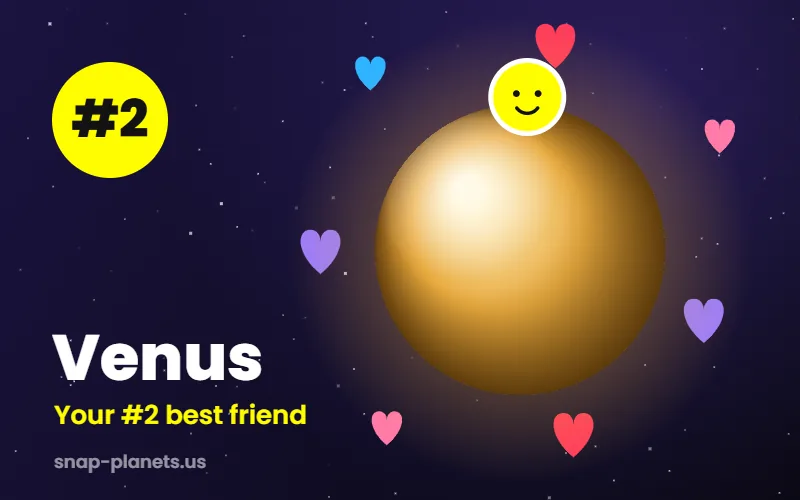
#2 Best friend
Looks like: a warm golden planet with colorful hearts.
A very close runner-up. The gap between #1 and #2 is often tiny, so one busy weekend of snapping can swap Mercury and Venus.
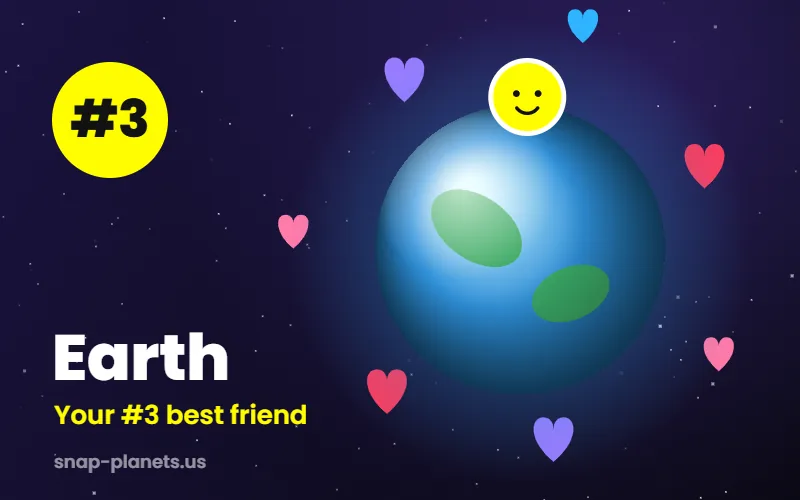
#3 Best friend
Looks like: blue and green shades with small hearts.
A steady, dependable friend. You talk most days, probably keep a streak alive, and are firmly in each other's inner circle.
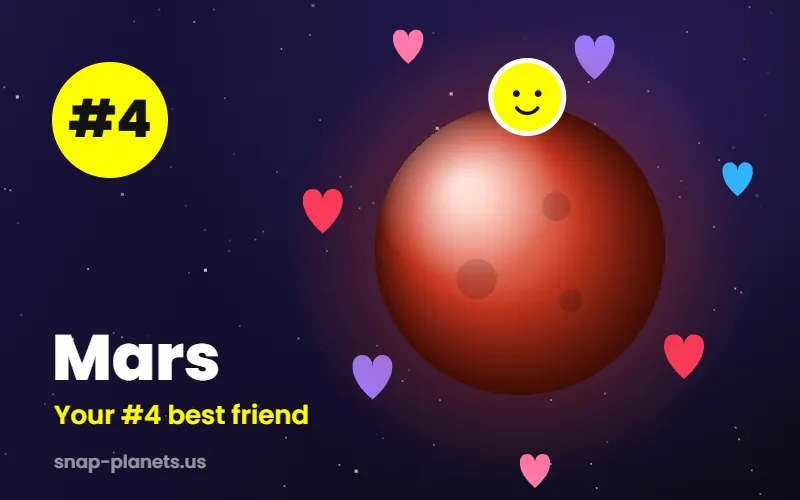
#4 Best friend
Looks like: a deep red planet with purple and blue hearts.
The last of the heart planets. You're in regular contact, just not quite as often as the top three.
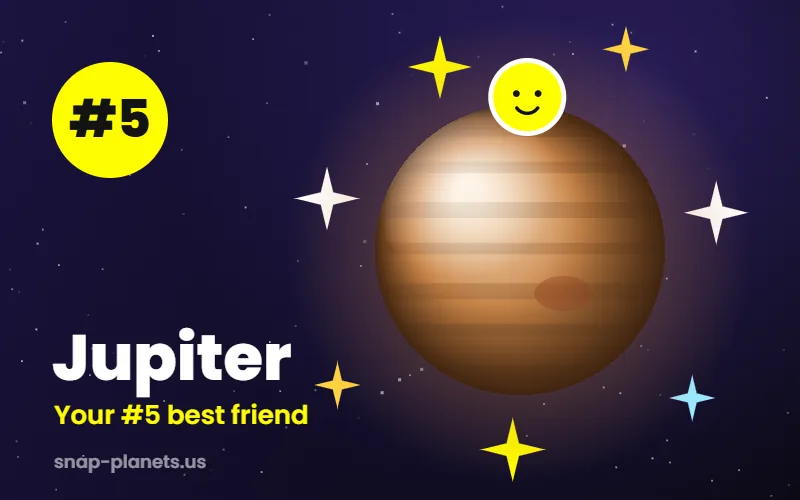
#5 Best friend
Looks like: a big orange-brown planet with bands and stars.
From here on, hearts turn into stars. Jupiter is a good friend you snap casually, often around stories or weekend plans.
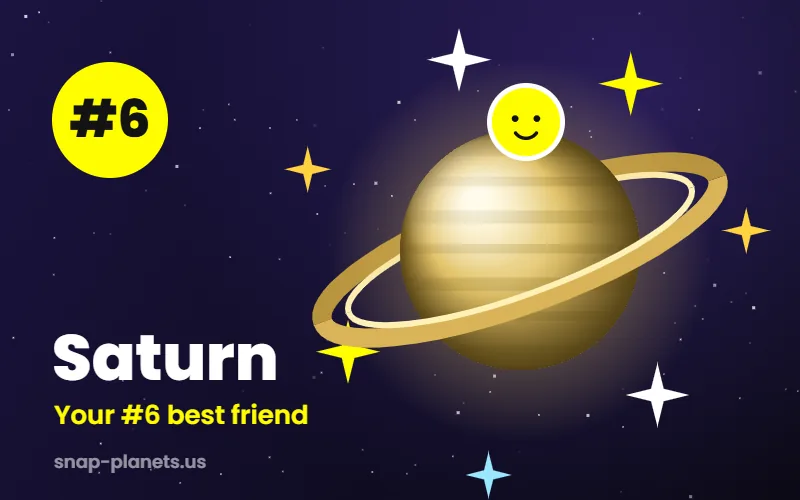
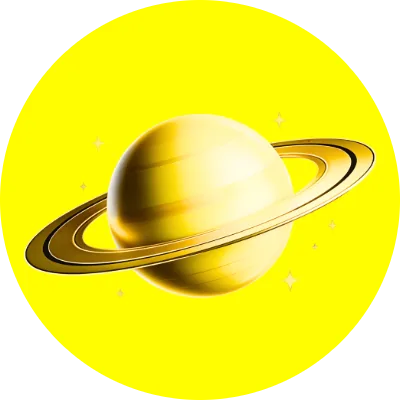
#6 Best friend
Looks like: pale gold with its famous ring.
Friendly and familiar. You chat now and then — plenty of classmates and coworkers end up on Saturn.
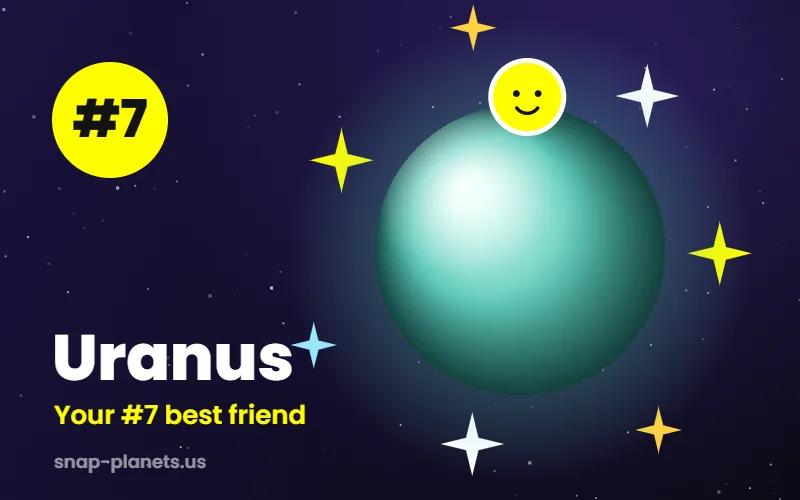
#7 Best friend
Looks like: a soft teal-green planet with stars.
Occasional contact that's still enough to stay in the top eight — often an old friend you still check in with.
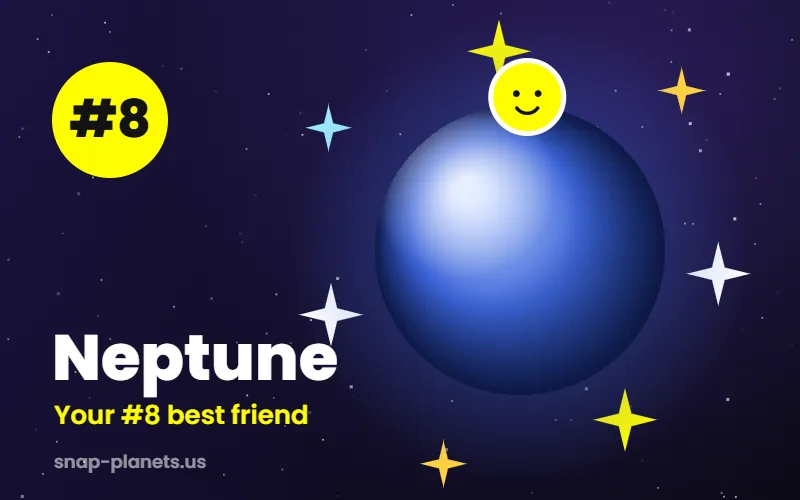
#8 Best friend
Looks like: a deep blue planet with stars.
The final spot. You interact the least of the eight, but you made the cut — and one good conversation can move you inward fast.
The decoration around each planet is a clue too. The four inner planets — Mercury, Venus, Earth and Mars — are surrounded by hearts. The four outer planets — Jupiter, Saturn, Uranus and Neptune — are surrounded by stars. Hearts mean inner circle; stars mean a solid friend a little farther out.
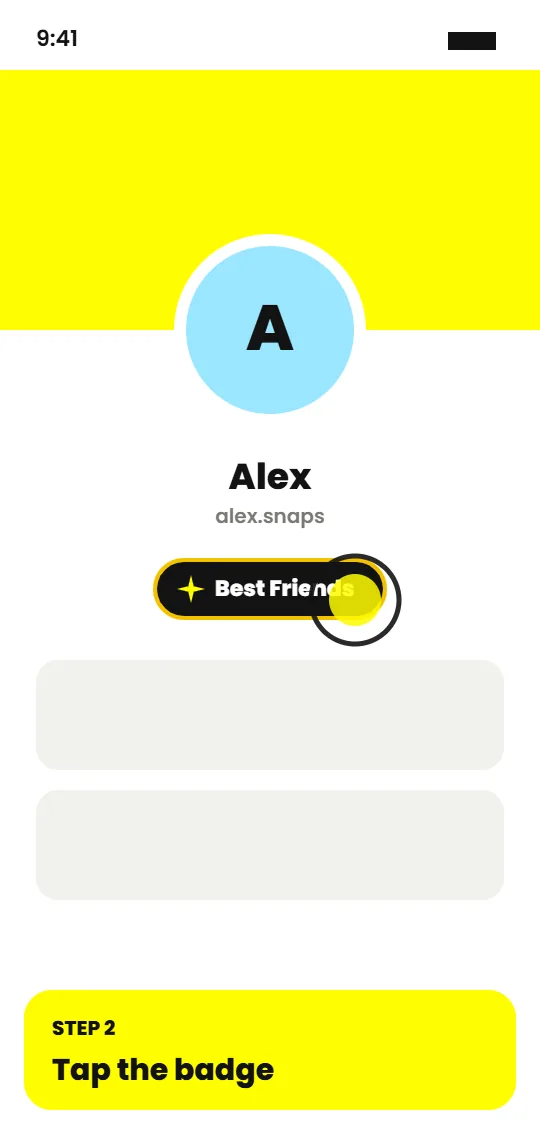
“Best Friends” badge
You're in each other's top eight. The friendship is mutual on both sides.
“Friends” badge
You're in their top eight, but they aren't in yours. Tapping it still shows your planet.
Snap best friends planets are separate from the hearts and faces next to names in your chat list. Those are friend emojis, and they follow their own rules — our Snapchat emoji meanings guide breaks them all down.
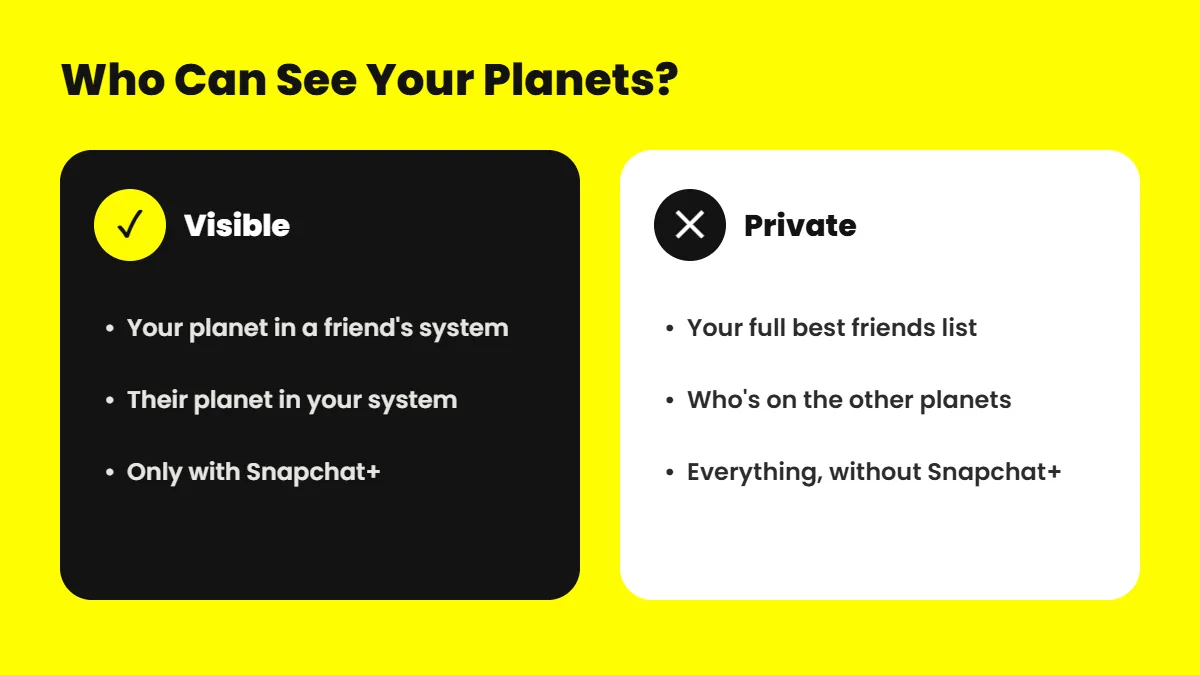
Snapchat Planets are private. Nobody can open your profile and browse your full list of best friends. Each person only ever sees their own position in someone else's solar system — never who else is on the other planets.
Snap BSF list planets come straight from the Best Friends list (“BSF” is the shorthand a lot of people type). Snapchat has never published its exact formula, but after testing and plenty of user reports, these signals seem to matter most:
Snaps sent & received
The biggest factor for most people. More back-and-forth snaps pull a friend inward.
Two-way chats
Real conversations count. One-sided messages seem to carry less weight.
Story replies
Replying to a story appears to matter more than viewing it silently.
One-on-one, not groups
Direct snaps to one person count far more than group chat activity.
Consistency
Daily contact beats short bursts. A streak helps because it keeps you consistent.
Recency
This week counts more than three months ago, so rankings are never locked in.
What doesn't seem to matter: viewing someone's profile, follower counts, or silently watching their story. Want the deeper version? Read our full Snapchat best friends list guide.
All three grow when you use Snapchat more, which is why people mix them up. But they measure very different things.
| Feature | What it measures | Can it drop? |
|---|---|---|
| Snapchat Planets | Who you interact with most, ranked 1–8 | Yes — shifts with recent activity |
| Snap Score | Total activity across your whole account | No — it only goes up |
| Streaks | Consecutive days of snaps with one friend | Yes — resets to zero if broken |
A 400-day streak doesn't guarantee Mercury. If you only send one snap a day and never chat, a friend who talks to them constantly will outrank you.
Snap Plus planets only appear for Snapchat+ subscribers. To see your planet in a friend's solar system, you need:
| Plan | US price (approx.) | Billing |
|---|---|---|
| Free trial | $0 | Often offered to new subscribers |
| Monthly | $3.99 | Every month |
| Annual | $39.99 | Once a year |
Prices vary by country and promotion — always check the app. Planets are just one perk; see every extra in our Snapchat Plus features list.
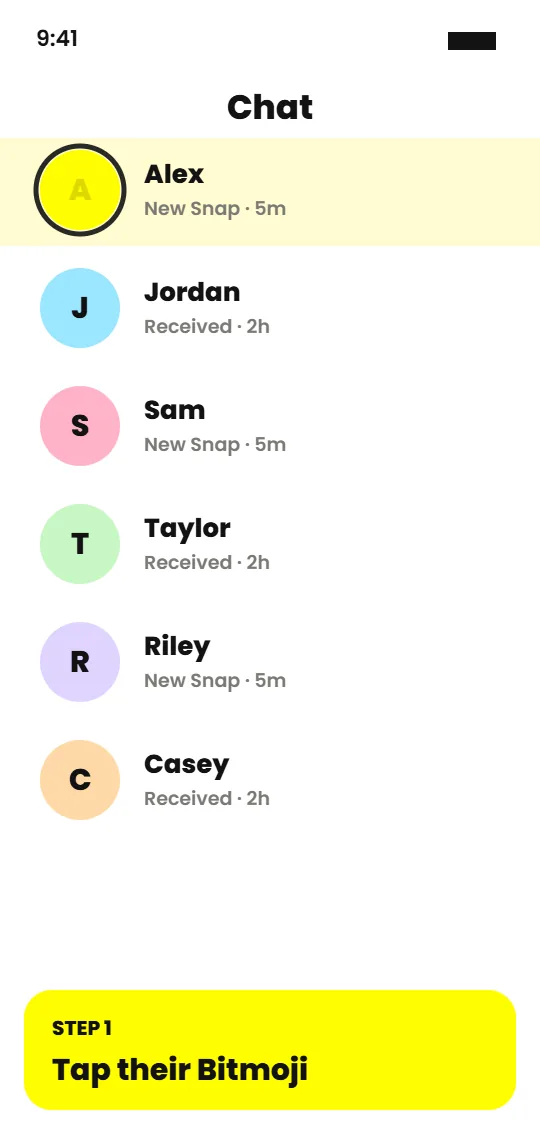
Snap made the Friend Solar System opt-in for new subscribers, so it's usually off until you switch it on. You can flip it either way at any time.
Menu names can change between updates. If yours looks different, Snapchat Support has the latest steps.
No badge? Either you're not in their top eight right now, or one of you hasn't switched the Friend Solar System on.
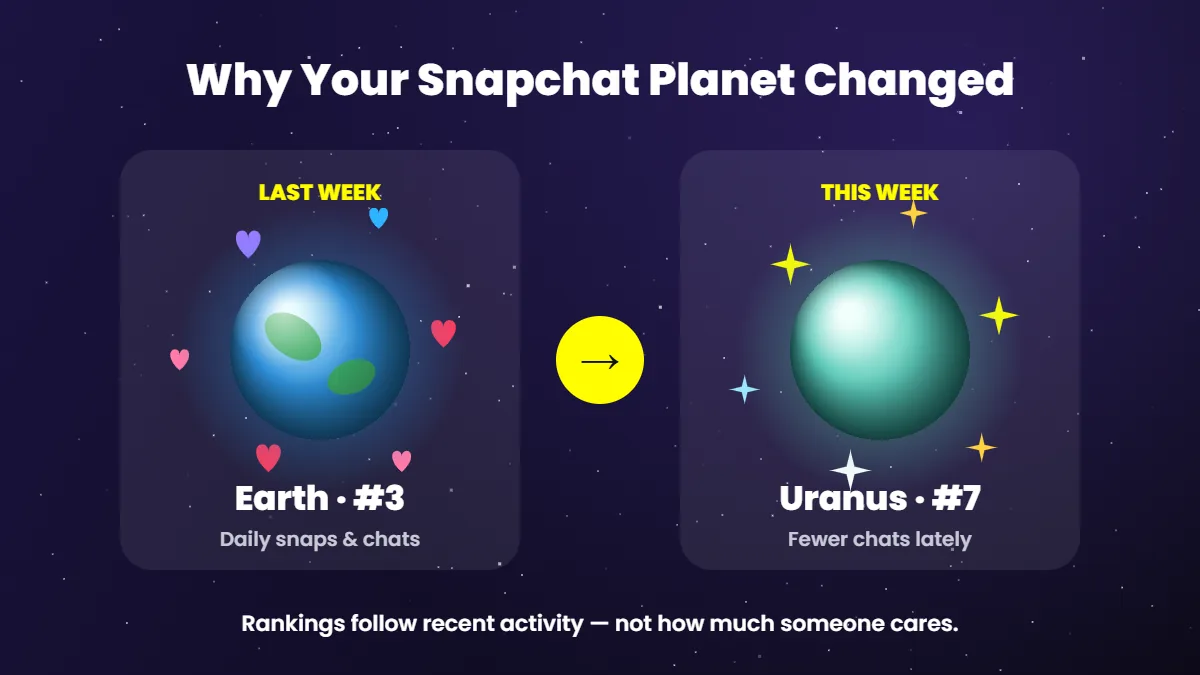
Sliding from Earth to Uranus can sting, but it's almost never personal. Planets move whenever interaction changes, usually within a day or two. Here are the issues we see most often:
Fix: check your Snapchat+ is active and Friend Solar System is on. If both are fine, update the app — that solves it more often than anything else.
Why: your friend has been talking more with someone else — a new partner, a trip group, a new class. It's relative, not a verdict.
Fix: close and reopen Snapchat, then clear the app cache from Settings. Rankings may be mid-update in the background.
Fix: log out and back in on the new device and give it a few minutes to sync.
Myth: Being Mercury means you're their best friend forever.
Fact: Rankings shift constantly. A quiet week can drop you to Mars.
Myth: No planet means they blocked you.
Fact: Usually the feature is off, a subscription lapsed, or you slipped out of the top eight.
Myth: Friends can see your whole solar system.
Fact: They only see their own planet in it.
Myth: Planets measure how much someone cares.
Fact: They only measure Snapchat activity. Texts, calls and real life don't count.
Skip “free planet checker” sites
No website or app can show your planet without Snapchat+. Most of them just want your login, and Snapchat can lock accounts linked to unauthorized third-party tools. If you want to try planets without paying, use the official free trial when it's offered.
Mercury (#1), Venus (#2), Earth (#3), Mars (#4), Jupiter (#5), Saturn (#6), Uranus (#7) and Neptune (#8).
Yes. The Friend Solar System is a Snapchat+ feature, so you need an active subscription to see planets on any profile.
Mercury. It means you're that person's #1 best friend on Snapchat right now. Venus and Earth still put you in their closest circle.
There's no fixed schedule. Planets shift as your recent interaction changes — usually within a day or two of a real change in activity.
No. Each person only sees their own position in someone else's solar system, never the full list.
No. They can't access Snapchat's data and often try to collect your login details. Stick with Snapchat+.
Snapchat Planets turn a simple best friends list into something you actually want to check. Mercury is #1, Neptune is #8, hearts mark the inner four and stars mark the outer four. It's a fun snapshot of recent activity — not a score for your friendship. Enjoy it, and switch it off if it ever stops being fun.
Meet the author
Snap Planets Editorial Team
We test Snapchat features on real accounts and update our guides when the app changes. Learn more about us.